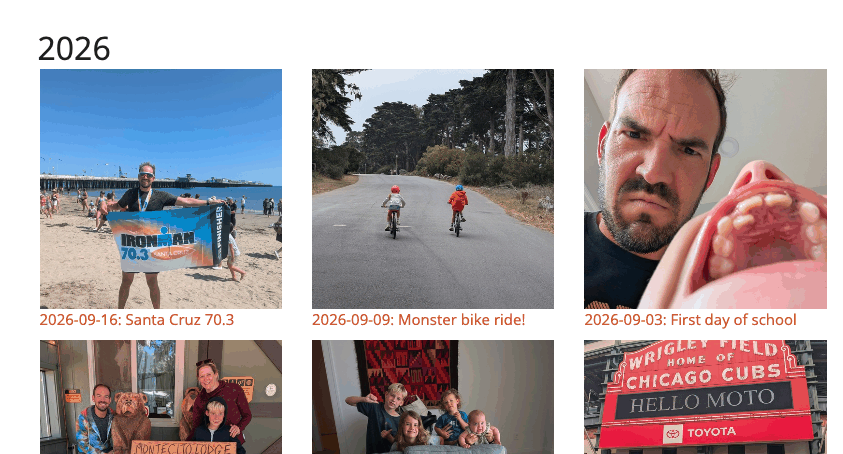
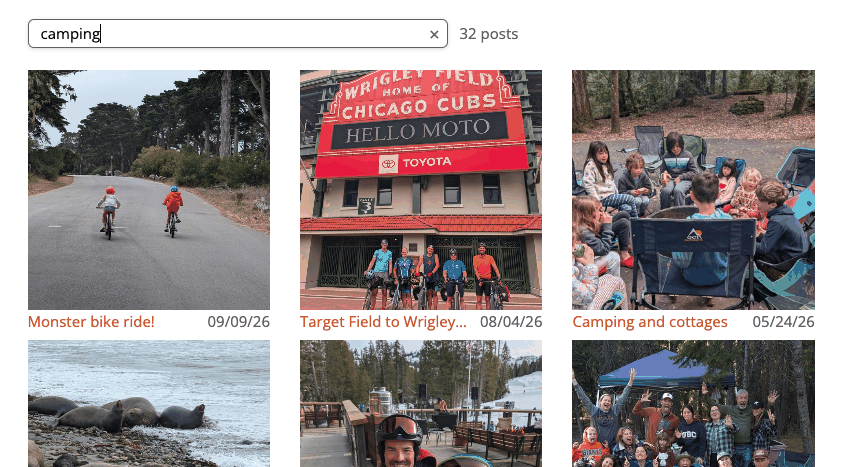
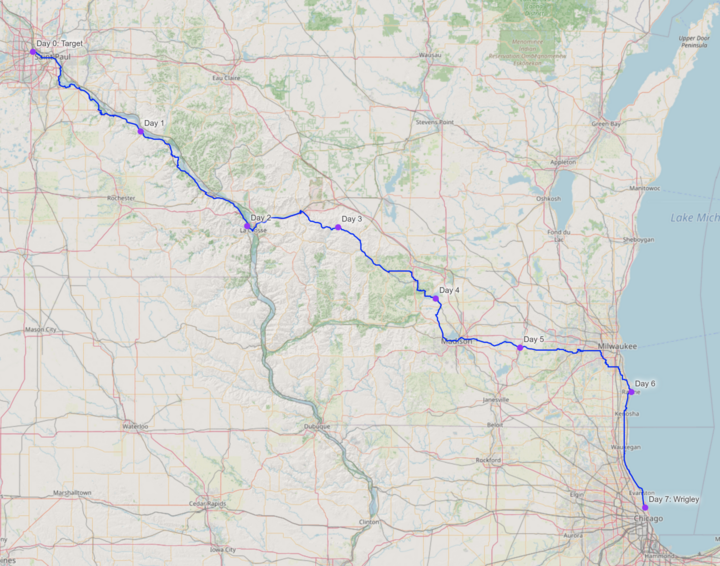
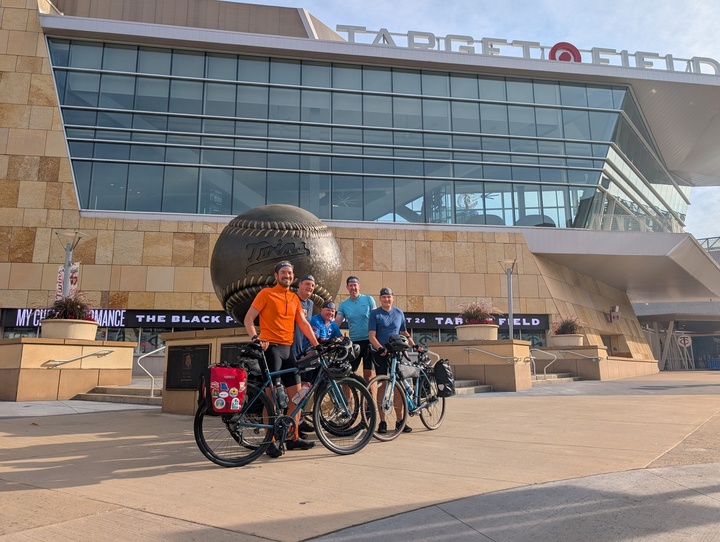
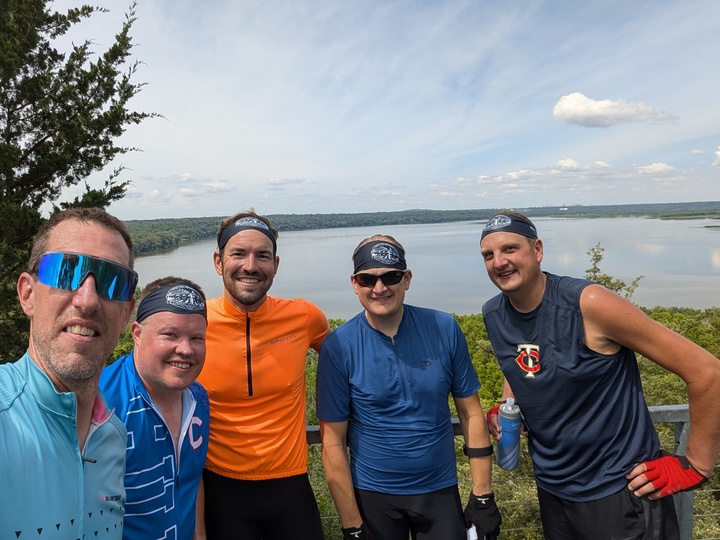
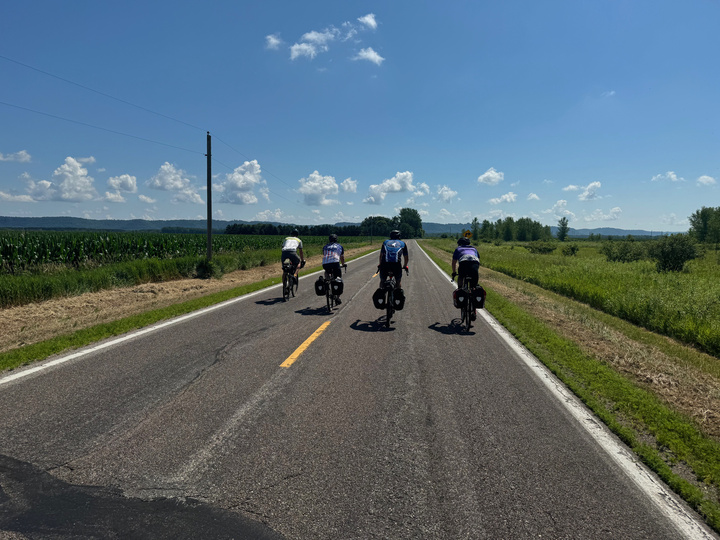
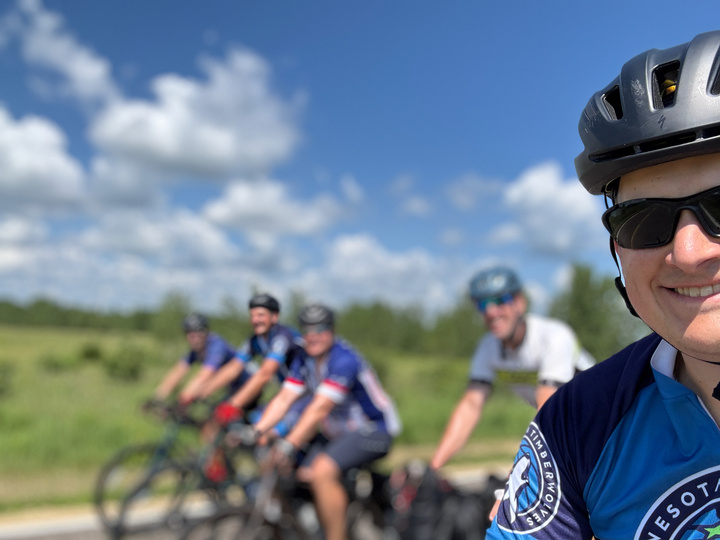
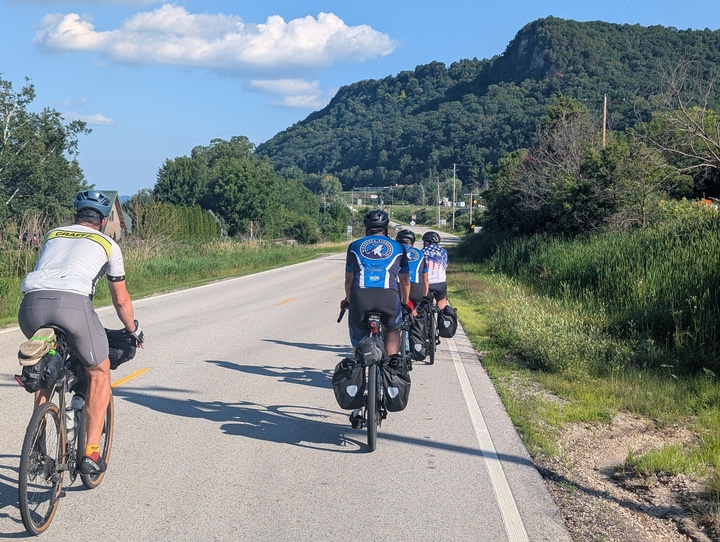
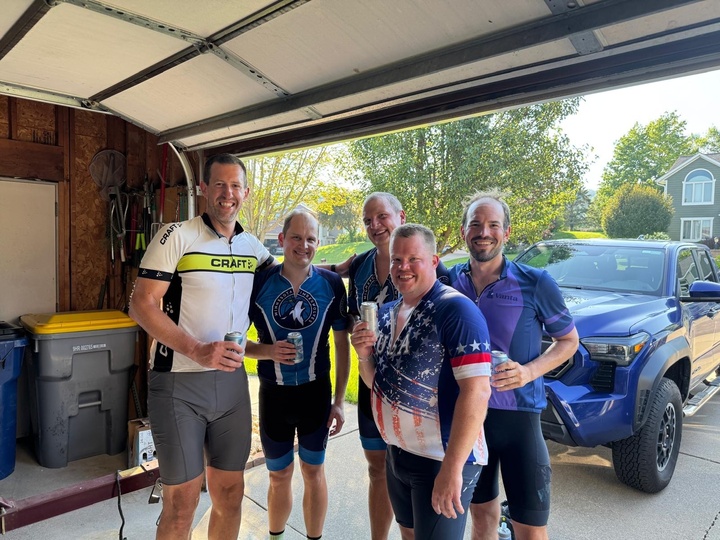
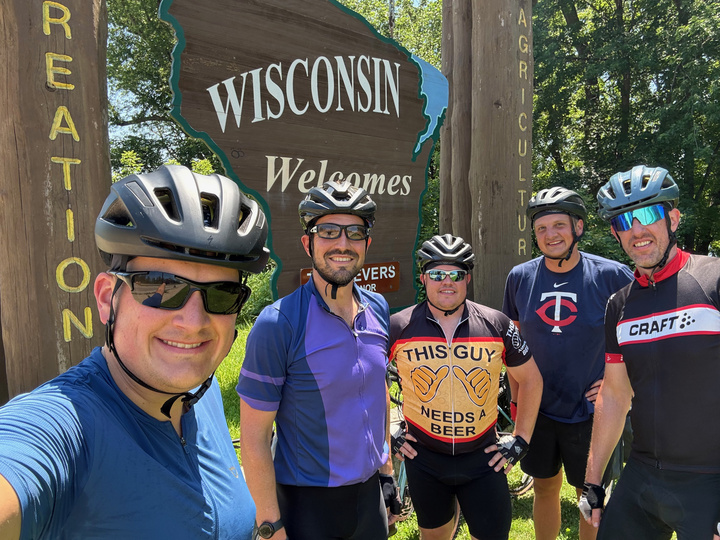
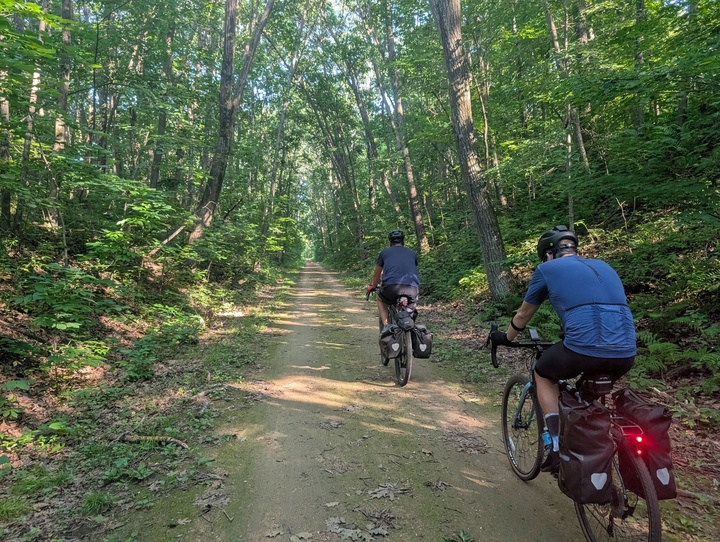
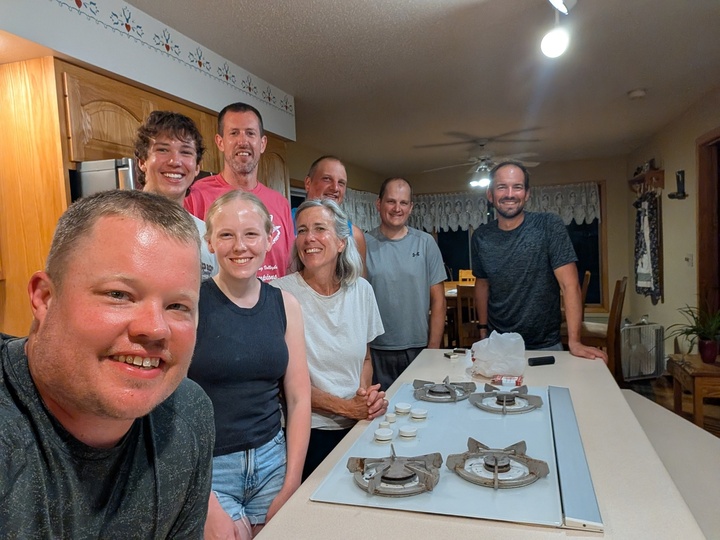
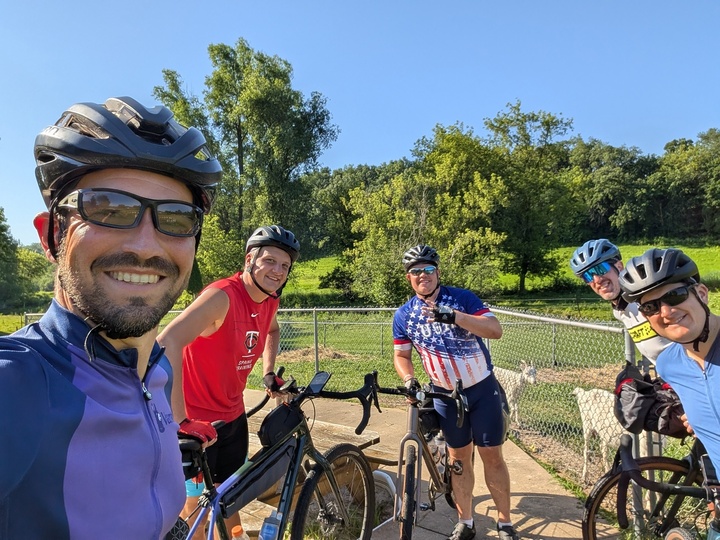
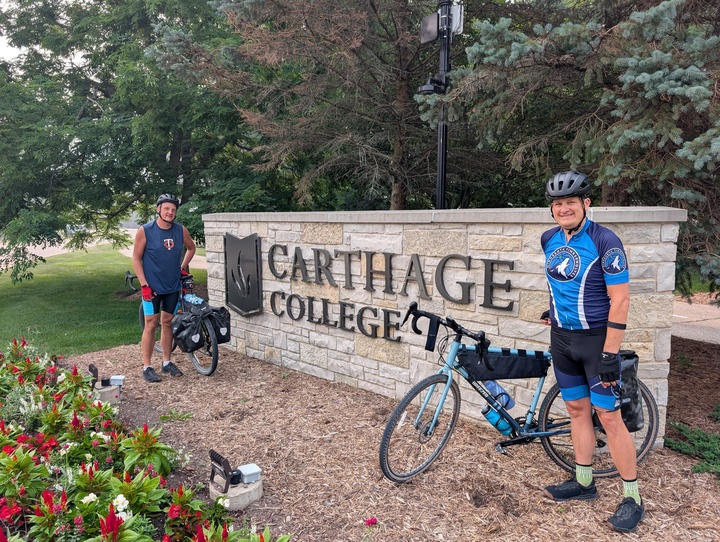
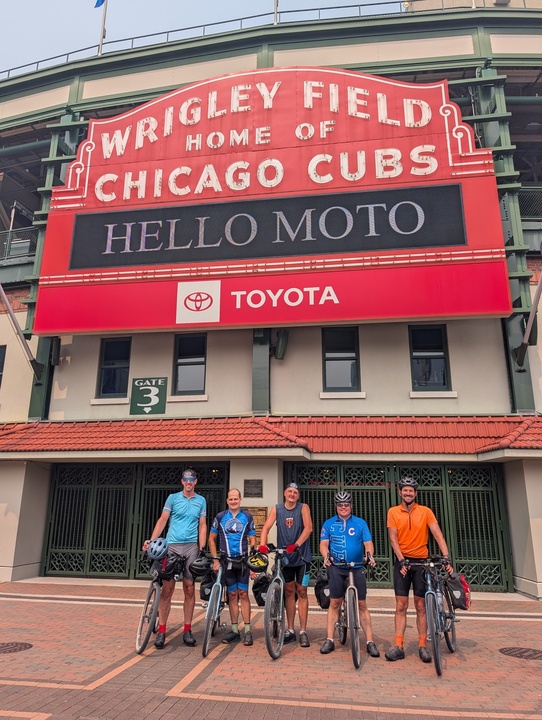
In July, I joined two of my cousins and two of their friends on a 500-mile ride from Target Field in Minneapolis to Wrigley Field in Chicago over the course of a week. Cousin B had just left a job after 16+ years and was doing a 2026 bike tour frenzy, so why not ride to Chicago to see the Twins play the Cubs? On a personal note, my cousins’ mother (my aunt) died of colon cancer 20 years ago, and all five of us had been impacted by cancer in a meaningful way, so we decided to make the trip a fundraiser for cancer research.
This was my third bike tour in three years, and the ride to Chicago was so different from anything I’d done before. The challenge was purely miles (not elevation), we had an ongoing heat advisory and feels-like-100°+ for most of the trip, and the last day featured horrible air quality due to Canadian wildfires. And day-to-day planning and decision making is very different with a group of five versus going on my own! It was a lot of fun.
Route
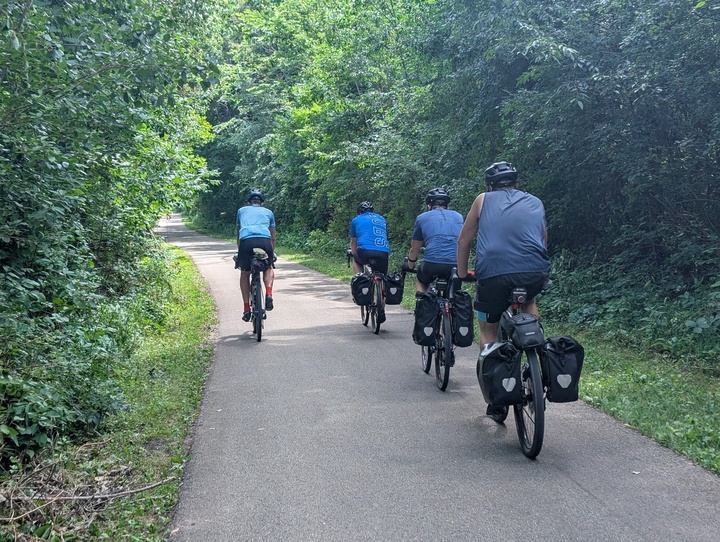
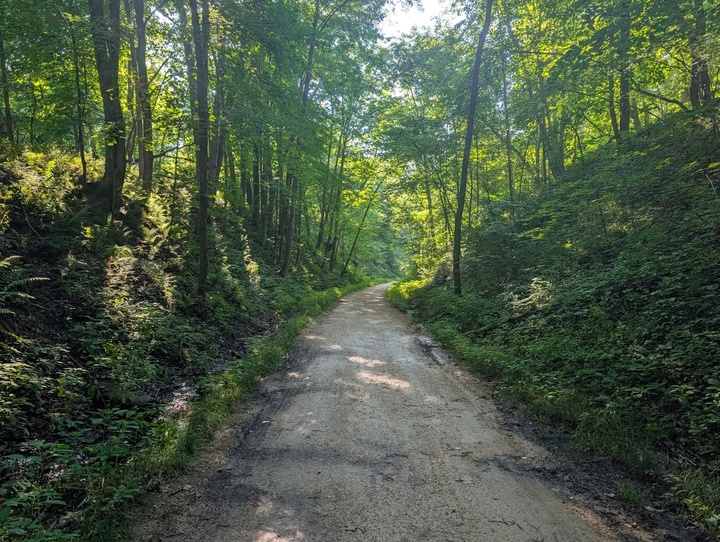
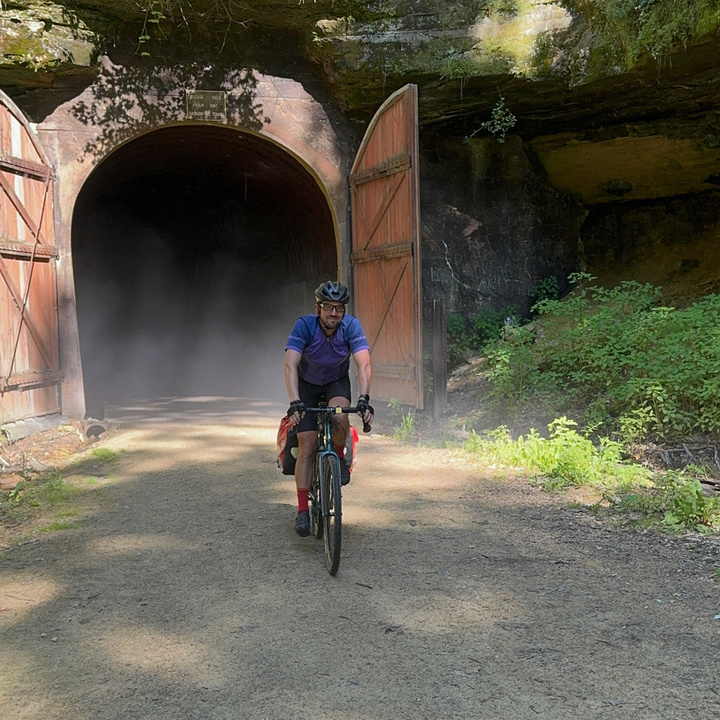
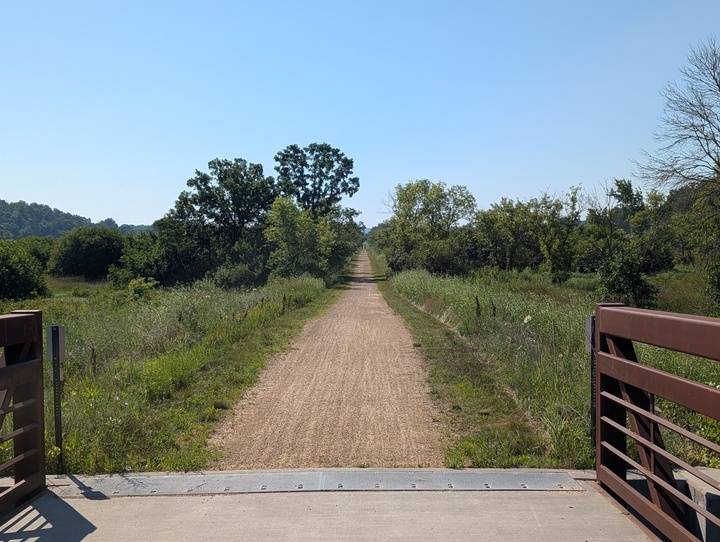
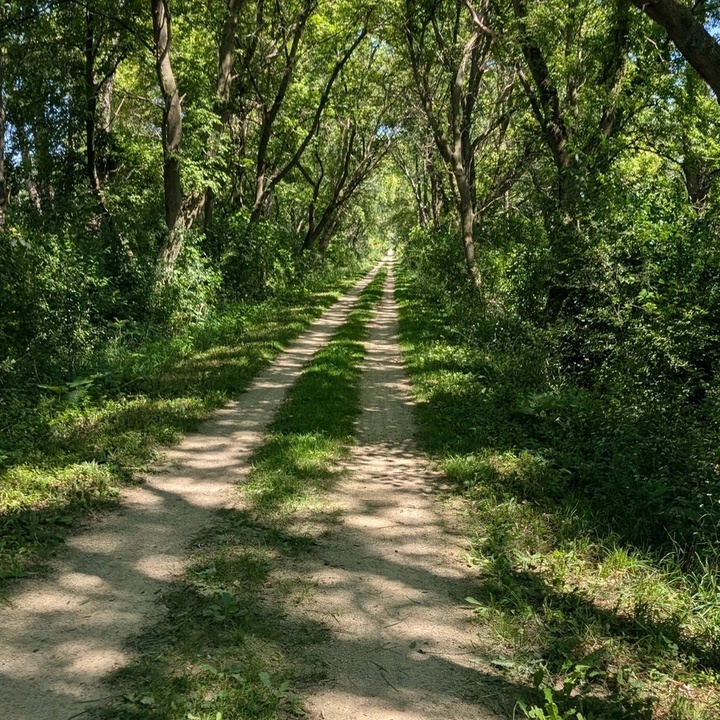
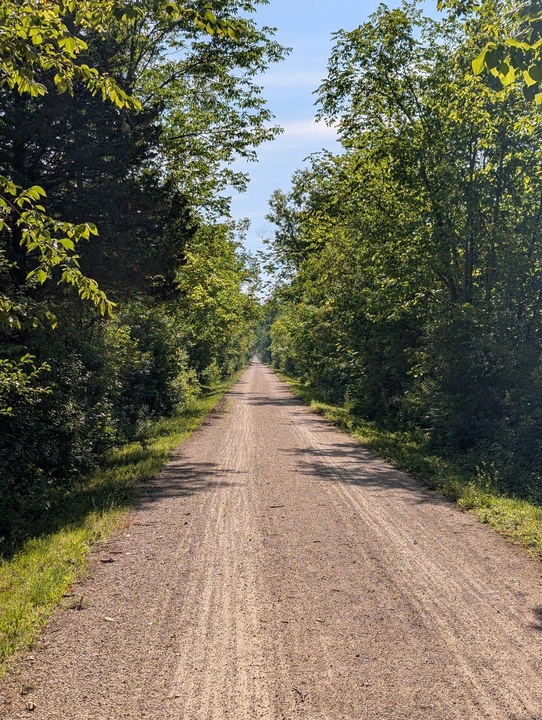
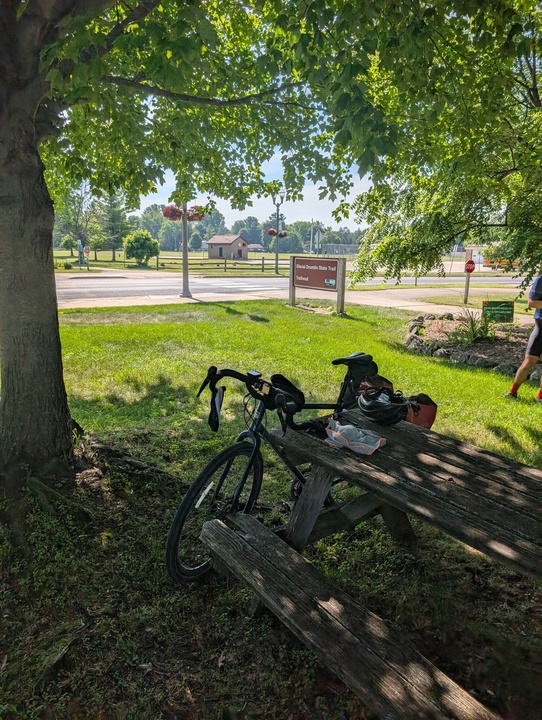
We stitched together the route using a combination of RideWithGPS and USBRS routes. There was a lot of overlap since most of our time in Wisconsin was spent on some classic biking trails like the Sparta-Elroy Trail (the first railroad to trail conversion in the United States!) and the Glacial Drumlin Trail.
We had the first two days planned out, staying with Cousin S’s in-laws in La Crescent, MN, but the rest of it we’d decided to plan day-to-day. After that point, we had flexibility since we were riding during the week (and thus expected more lodging availability), and the Midwest’s tendency toward summer rain and thunderstorms left us with little confidence that we’d be able to make a schedule more than a day or so in advance. This turned out to be a great decision. Given the sweltering heat and some mechanical issues, we ended up cutting about ~50 miles from our original route so we could get to Wrigley on time.
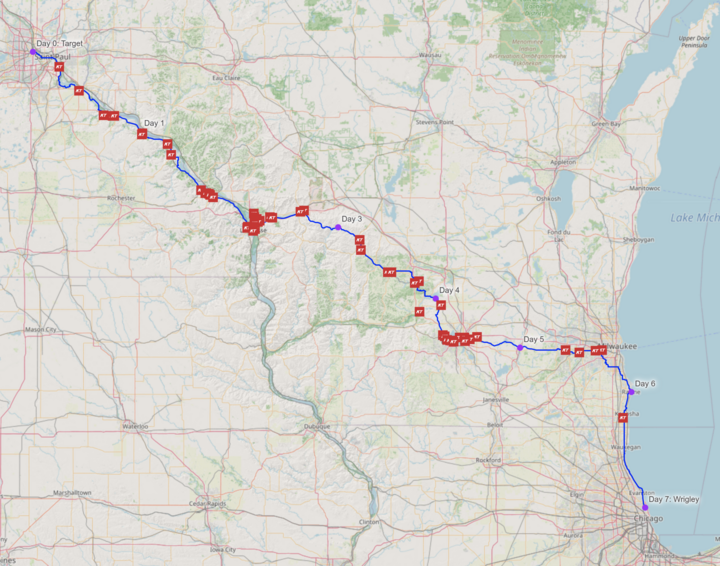
Another key component of our route planning was scouting out the Kwik Trips along the way. Headquartered in La Crosse, WI, Kwik Trip is like a gourmet gas station stop, and we hit at least one each day they were available. I’m a recent convert.
Day 1: Target Field → Lake City, MN
88.1 miles, 2670’ elevation gain
After much debate and several side bets regarding when we’d actually leave, we ended up departing within 30 minutes of our 8am scheduled meeting time at Target Field. I don’t think anyone expected this, but we did it!
Cousin S unveiled custom headbands that he’d made for each of us from the very-AI-generated joke logo we’d created for the trip. These turned out to be supremely useful given the miserable heat that we were soon to experience.
Our route led us through St. Paul and onto a series of trails southeast along the Mississippi. We had to route around a trail closure over what ended up being a relatively large (300’) hill, discovered that a bridge no longer existed, and then went through a different trail closure that had started earlier than advertised.
By the time we rolled into Lake City, the only 12-pack of beer available at the gas station by our hotel (3.2% per Minnesota law) went down pretty quickly. Super-light beer is perhaps good for hydration, but the “uno más” we had after dinner was not.
Day 2: Lake City → La Crescent, MN
78.6 miles, 2058’ elevation gain
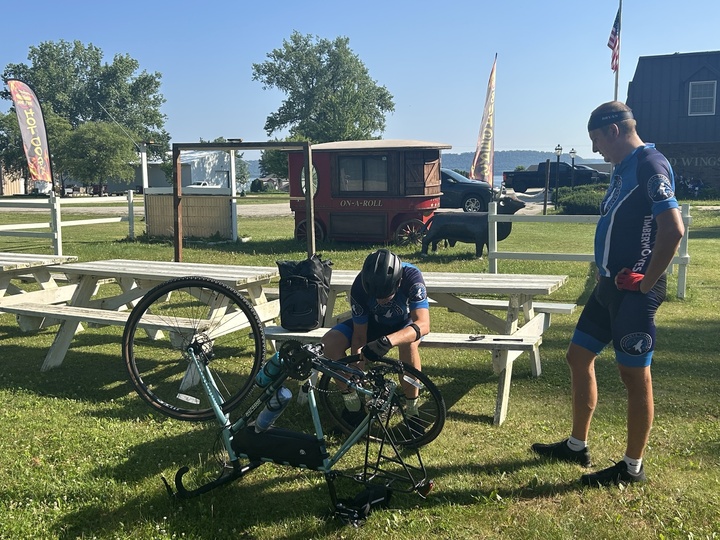
The day started easily enough with a ride through town along the river, and then the flats came. Cousin S ran over a safety pin, and it did not provide very much safety to him!
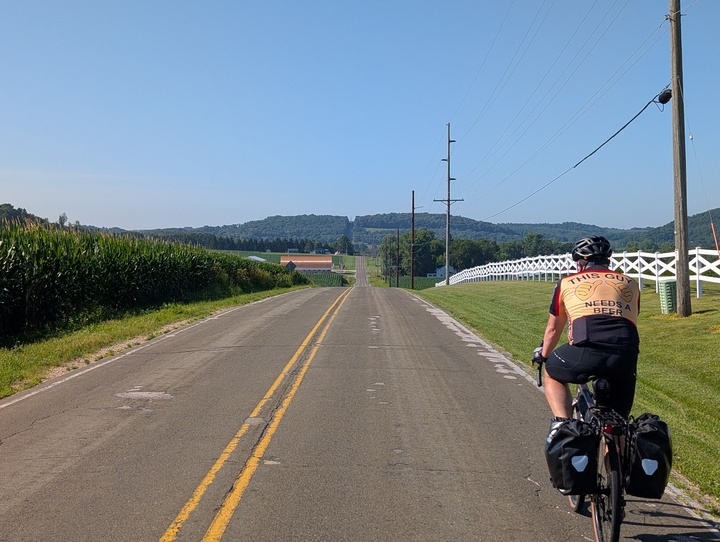
The day was mostly on Highway 61 (yes, Bob Dylan’s Highway 61), though we got to sneak off on some county roads where offered the opportunity.
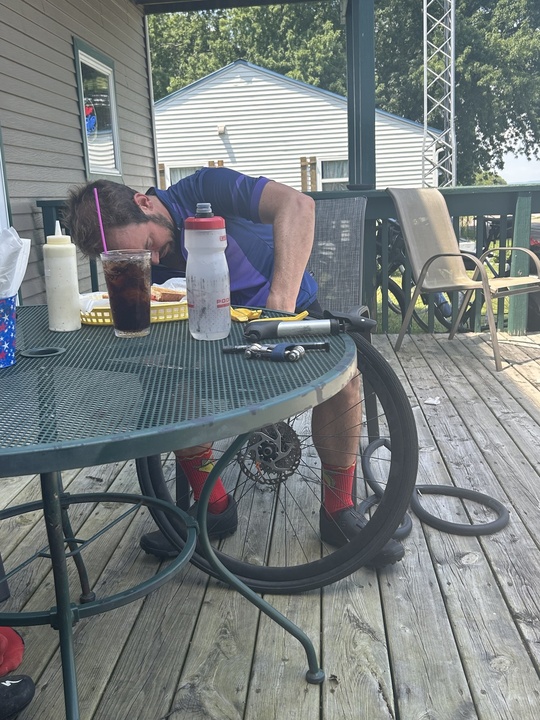
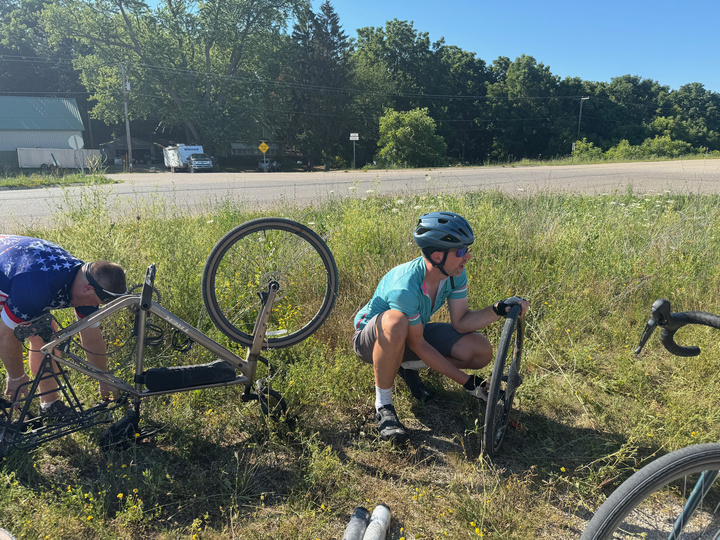
I must have run over a rock or something because I had a slow air leak getting back on the highway. I topped it up every few miles, hobbling my way to lunch, where we ate on a deck overlooking the Mississippi while I wrestled with my tire. For whatever reason, my rims make changing the tire super difficult, but Cousin S showed me the way with his Tyre Glider, a superior way to remove and later reseat tires. This is the way.
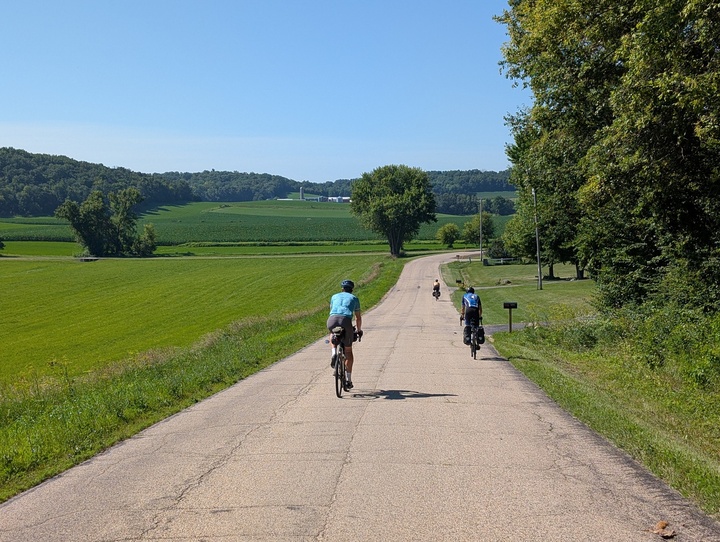
Back on the road with the confidence that only a fresh tube can bring, we continued our slog down the highway until we got into the Driftless Area, a series of beautiful bluffs and cliffs.
We ended the day at Cousin S’s in-laws place, and they immediately handed us a cold beer (sense a theme?). They hosted us to a fabulous dinner and a hot tub, and we had a wonderful evening.
Day 3: La Crescent → Wilton, WI
56.4 miles, 1211’ elevation gain
The next day, we took it slow in the morning, sleeping in and enjoying an amazing spread for breakfast. Thank you, K and R! This was our first heat advisory day, and fortunately, it was a relatively short ride.
First, we crossed the Mississippi and officially entered Wisconsin!
Shortly after, we rode some well-packed dirt and gravel trails up to Sparta, where I helpfully yelled, “THIS. IS. SPARTA”, and hopped on the Sparta-Elroy Trail, the first rails to trails conversion in the United States. Before cars, we had a lot of local railroads, and many of those routes have since been converted to multi-use trails. This was the first!
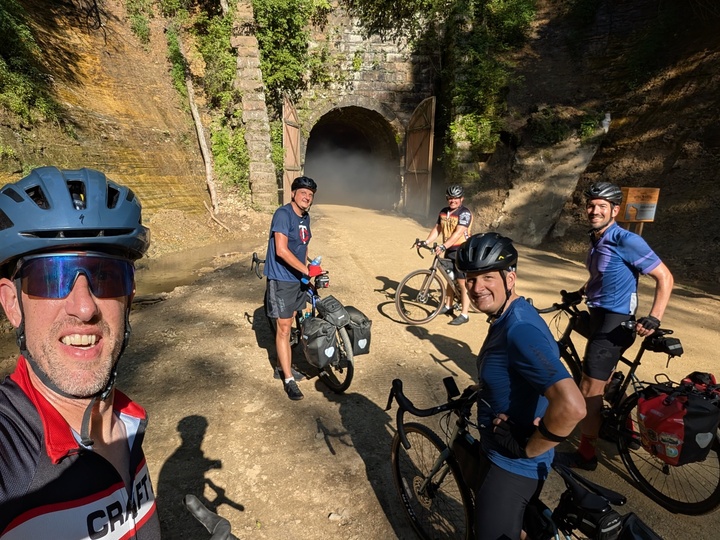
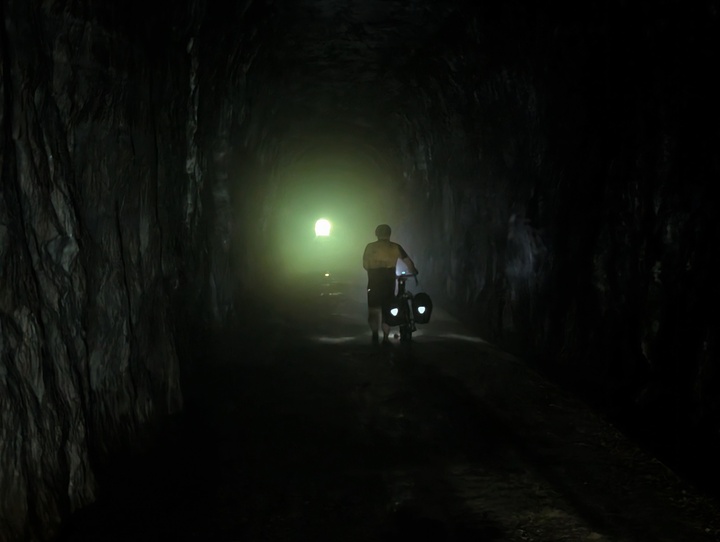
The Sparta-Elroy Trail featured three very cool (literally) and dark tunnels. I know better than to ride over wet, mysterious terrain in the dark, so we walked our bikes.
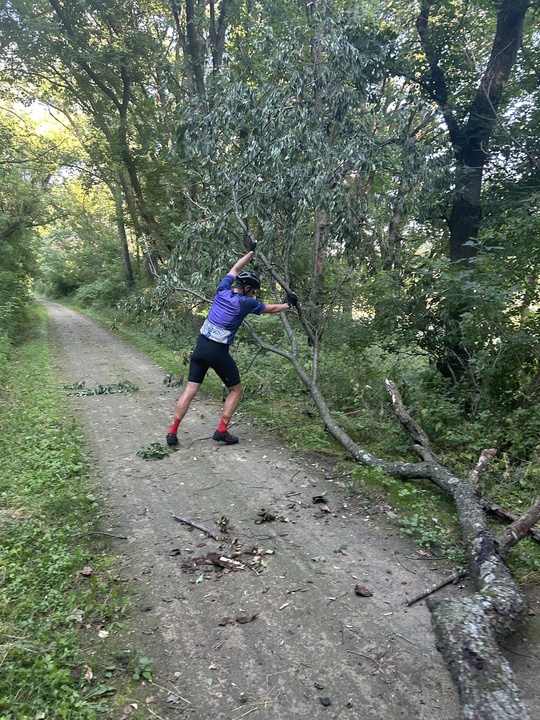
At one point, we had to do some trail maintenance, clearing a tree that had fallen in the road. I still have not received my compensation for these services from the state of Wisconsin.
Lodging is sparse in this part of Wisconsin, and we ended up staying at an old schoolhouse that was converted to a multi-room Airbnb. What it lacked in shampoo it made up for in charm, as the road in front was a veritable highway for Amish buggies, and the backyard had a handful of farm animals.
Friend C’s Aunt J and her kids came by and brought cold beer and dinner for us to cook together, too! They have a cabin not too far away and were excited to join us on our adventure. Thank you, Aunt J!
Day 4: Wilton → Lodi, WI
70.2 miles, 2198’ elevation gain
Because we’d gone 10 miles further than we’d originally planned on Day 3, we discussed punching it all the way to Madison on Day 4. Our luck with mechanical issues and another heat advisory had other plans.
We wrapped up the Sparta-Elroy Trail and lunched in Reedsburg, the halfway point of our trip! Since we were in Wisconsin, I ate cheese curds at least once a day, and these were some of the best.
Unfortunately, it was Friend C’s turn to get a flat, and the sealant in his tubeless tires wasn’t doing the trick. He and Friend G spent some time with it on the side of the road while Cousins B and S and I went to some nearby air conditioning for drinks and snacks. It ended up being quite a long day, and we decided to end our day in Lodi instead.
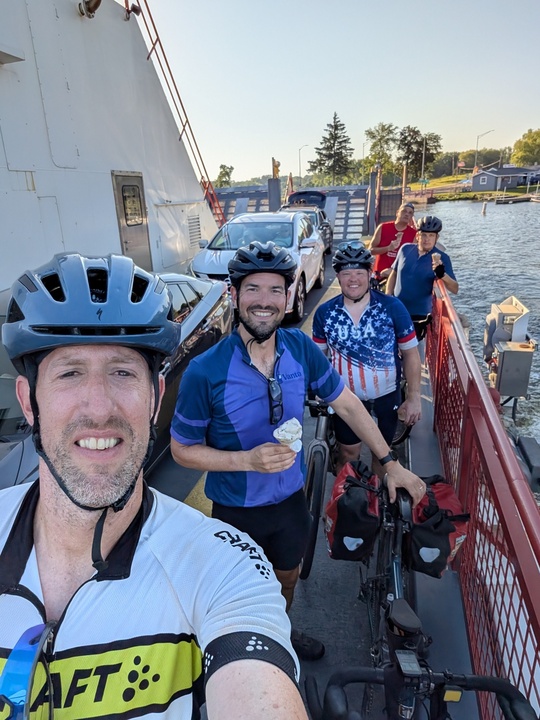
We got to take a short ferry that had a fabulous ice cream place on one side, and given the feels-like-100º heat, we had to eat with purpose to finish our ice cream before it melted.
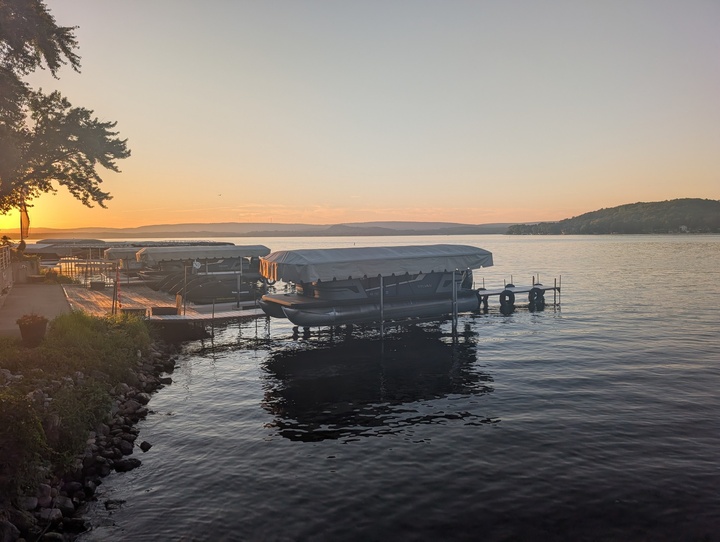
Lodi is a quiet lake town, and we were lucky that one of the restaurants was open when we arrived.
Day 5: Lodi → Jefferson, WI
64.8 miles, 1980’ elevation gain
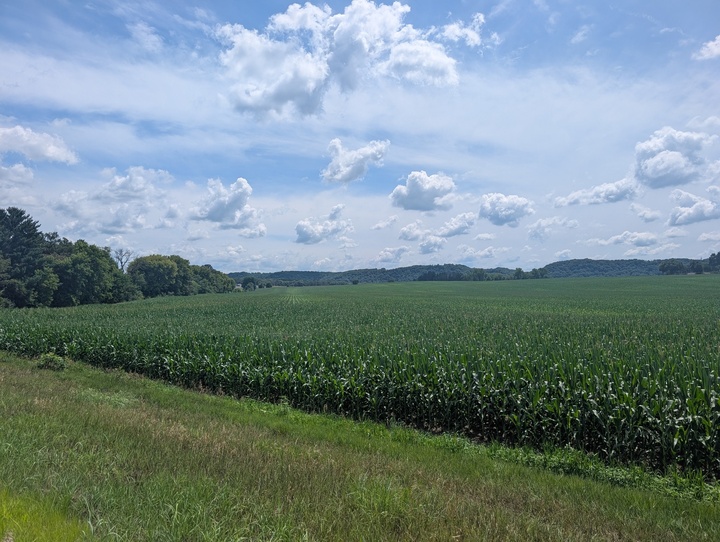
Another day, another heat advisory. We rolled through Madison and hopped on the Glacial Drumlin Trail. At this point, the heat was getting to us, and I almost didn’t believe Friend C when he told me about “corn sweat”, the process by which corn releases water as vapor to help it stay cool. The implication of this is a sudden wave of humidity while biking next to a cornfield. Yuck.
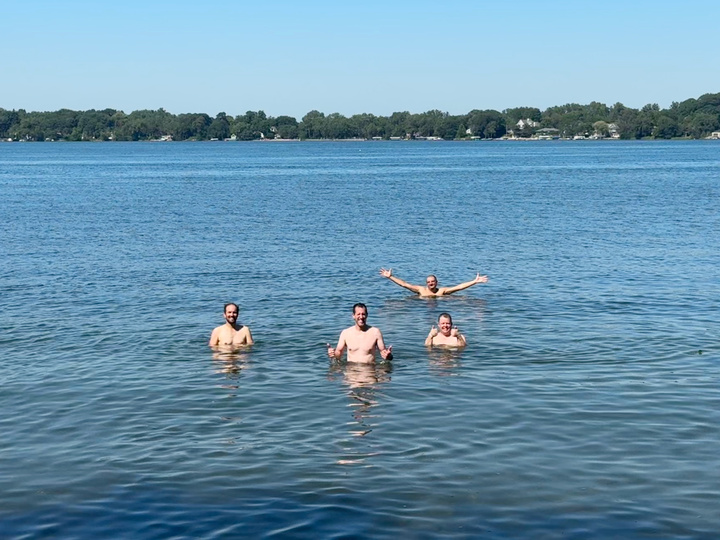
Fortunately, we also came across a nice lake. Cousin B enjoys talking about going swimming, and I’m glad we were able to make it happen!
We had another decision point, whether to stop in Jefferson or continue on to the next available lodging ~20 miles down the trail and another 5 miles off it. Friend C’s bike made the decision for us, offering yet another flat for our group right before we rolled into Jefferson.
We opted for a relaxed maintenance session in air conditioning, some pool time, laundry, and exploring the offerings at the A&W and the gas station that shared the parking lot. Yum!
Day 6: Jefferson → Racine, WI
76.0 miles, 817’ elevation gain
Fortunately, after three consecutive days of heat advisories, we finally had some relief. Just kidding, we had another heat advisory and yet another feels-like-100º day! Blegh.
Given the misery of the heat, we rerouted a bit and cut Milwaukee out of our route. The new route featured fewer trails and a long stretch of criss-crossing an exposed, busy road every other stoplight, which was decidedly unpleasant. I also had another slow-leaking flat. Blegh blegh blegh.
We went through Friend C’s hometown, which was also where Les Paul apparently grew up. At our lunch stop, I learned about pull tabs and then won $50! It was a tiny silver lining.
We decided to call it a wrap in Racine for some rest and (for me) unhurried repair time. It was cooler by Lake Michigan, but after dinner, the smoke from the Canadian wildfires started to settle in…
Day 7: Racine → Wrigley Field
69.7 miles, 528’ elevation gain
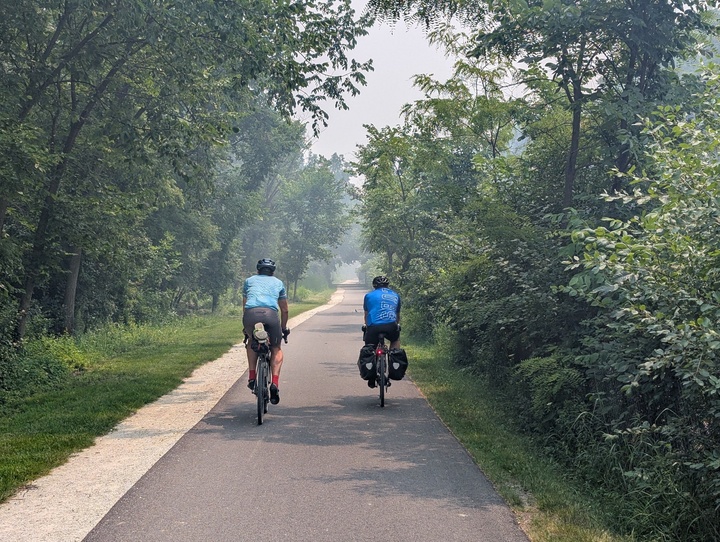
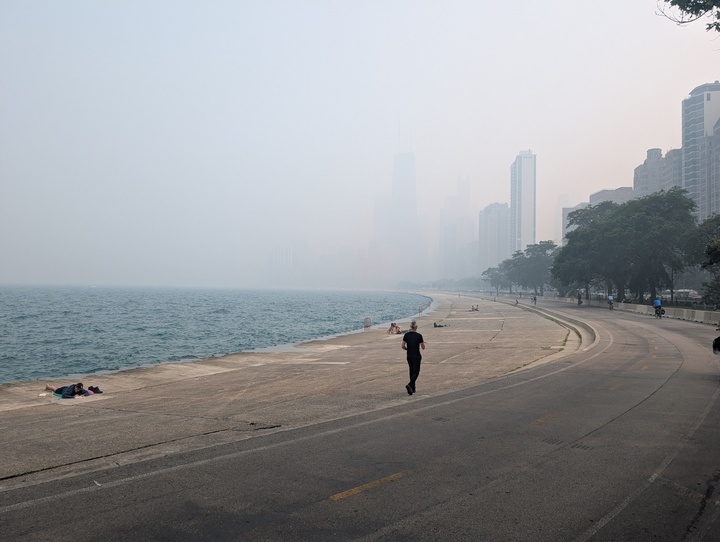
No heat advisory today, baby! Instead, we were treated with AQI higher than I’d ever seen before due to the wildfires. Apparently, biking in this for six hours was equivalent to smoking two packs of cigarettes. Yikes. Had this not been the last day of the tour, we probably wouldn’t have ridden.
In spite of the smoke, we FLEW with the cooler weather and paved trails. We made a stop where my Cousin T had gone to school, and I did a quick tour of Northwestern for L.
We’d cut the trail version of our ending to save some miles, so we plodded our way through Chicago-area traffic the last ten or so miles. But WE MADE IT!
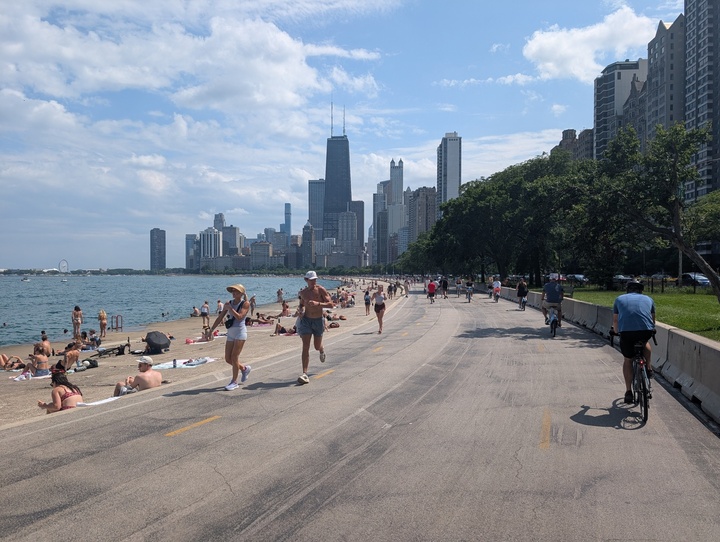
The smoke was thick on the lakeside path to the Loop, where we stayed. Cousin S and I did the same trail a few days later, and the comparison was wild.
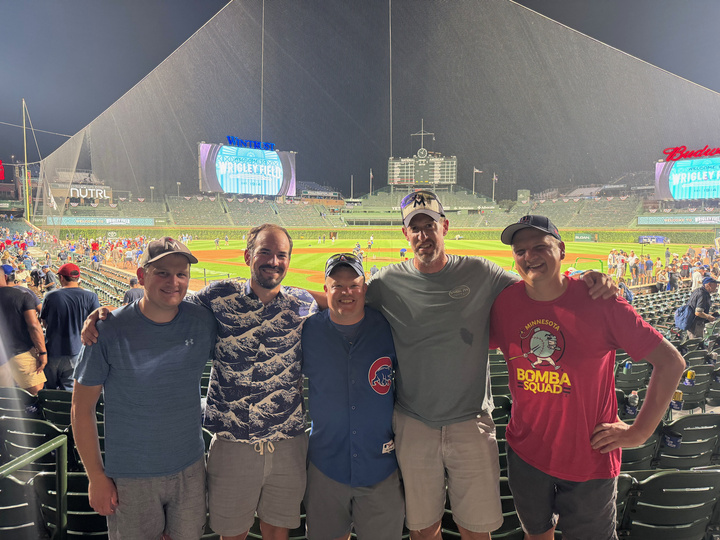
We had a lovely weekend in Chicago and of course went to the Twins-Cubs game on Friday night. Cousin B had been in contact with Audra Martin, the Twins sideline reporter, and our journey was featured for about a minute during the Twins broadcast.
Target to Wrigley, complete!
Reflections
This was a totally different bike tour from Crescent City to San Francisco and my crosscountry ride last year. I had never experienced terrible air quality, and while I’d ridden on some scorching days, I didn’t have day after day of miserable heat like we did on this trip. Still, heat is more predictable than rain, and one can still plan around it to make progress.
Riding with a group of five was a significant difference for me. As is expected, anyone’s slowdown (e.g. needing to pee, flat tire) is everyone’s slowdown, and we preferred to stick together where possible. I felt that our biggest challenge was in making decisions as a group. Our natural inclinations for when to start, how often to stop, how long to stop, etc, were different, and it took a few days at least for me to figure this out.
One helpful side effect is that this experience helped me crystallize my own default modus operandi. Specifically:
- There is one goal, and that is to get to where you’re going in one piece. Nothing else matters, including hitting particular waypoint, completing a particular trail, doing the route exactly as planned, or getting as far as you thought you might that day.
- Leave early to avoid the heat of the day and to maximize optionality (go further if you’re feeling it) and flexibility (deal with mishaps while the sun is still up).
- Stop infrequently and for a relatively short time – more sandwiches than sit-down meals.
- Get to where you’re going and THEN hang out, have a beer, etc.
Everyone’s different, and there’s not a right way to do things. I’m generally flexible, though navigating expectations (spoken or otherwise) in making day-to-day decisions was a fun new challenge for me!
Notes
These are mostly for myself, but read on if you’re interested! Honestly, I can’t believe you’ve made it this far…
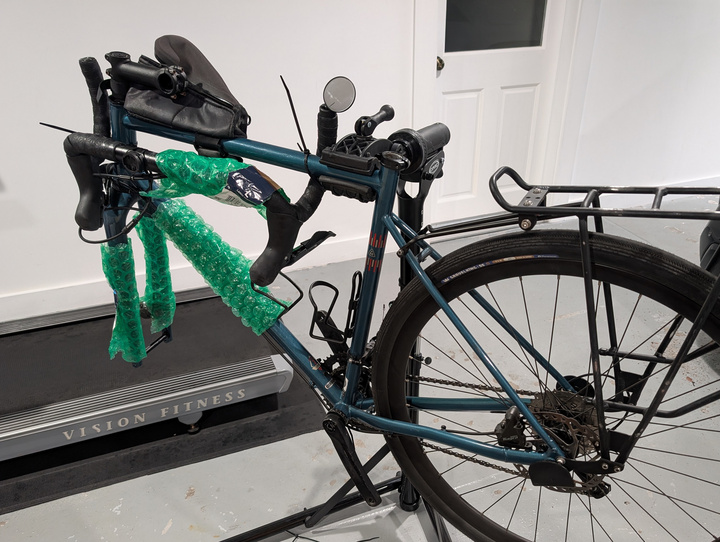
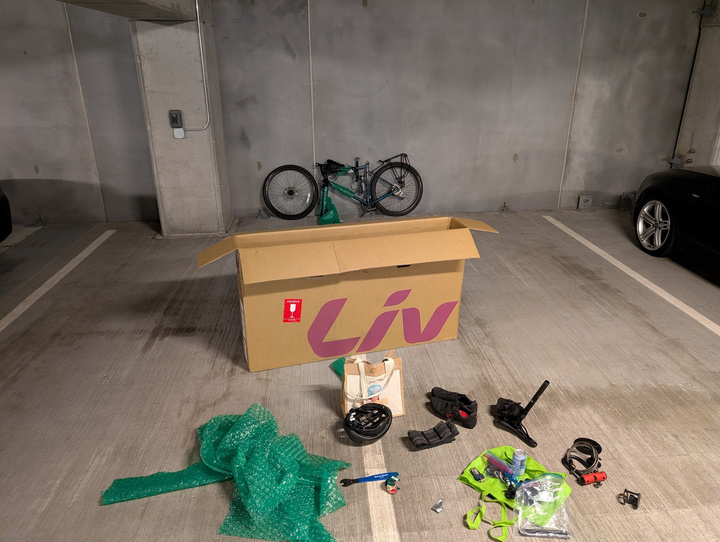
Now that I’ve shipped my bike four times, I’ve gotten a lot more confident in disassembling/reassembling. The bike box I had for this trip was large enough that I only had to remove the handlebars and the front wheel, which made things a lot easier, too! Each of my disassembly/assembly steps took about 30 minutes, which is a lot faster than the first time I did it.
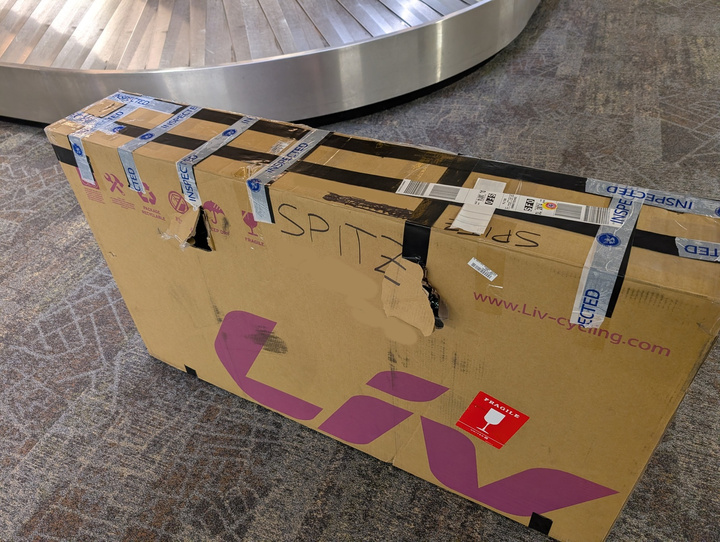
Taking a bike on an airplane is always a roll of the dice, but in spite of TSA’s interest during my return flight and the brake levers popping out the side afterward, the bike seemed to come through OK.
I’ve now put 8200 miles on this fine steed, and I look forward to the next 8200!
Packing list
On the bike
- Safety vest (safety first!)
- Helmet
- Biking gloves
- Shoes with cleats (SPDs)
- Transition sunglasses
- 2 water bottles
- Bike computer
- Front light
- Garmin Varia RTL515 radar tail light
- Microfiber towel
- Bandana
- Lock & cable
- 2 sets of socks
- 2 bike bibs (Ornot)
- 2 short-sleeve jerseys
- 2 sweat bands
- Lightweight rain jacket
- Lightweight sweater
Notes: With the heat advisories, I definitely didn’t need the sweater, but I certainly used the sweat bands! I didn’t need the rain jacket, either, but I’m glad I had it. I also didn’t end up using the safety vest since we were a larger group and mostly rode on trails or quiet roads. The front light ended up being surprisingly helpful in the dark tunnels on the Sparta-Elroy Trail. Since my last trip, I swapped my SPD/SL cleats for SPDs and had zero issues this time.
Off the bike
- Sunglasses
- Chacos sandals
- 2 camping underwear
- 1 shorts
- 1 button-down shirt
- 1 short-sleeved shirt
- Swimsuit
- Goggles
- Baseball hat
Repair
- Reusable grocery bag
- Garbage bags
- Ziplock bags
- Zipties
- Small duct tape roll
- 3 tire levers
- 3 spare tubes
- Patch kit
- 1 spare tire
- Topeak rechargeable air pump
- Presta/schrader valve conversion (for gas station air pumps)
- Multi-tool
- Small screwdriver
- Chain lube
- 1 bike lock key
- Ratchet straps in case we need to hitch a ride
Notes: I ended up replacing two tubes, which is more than I’d expected. Changing tubes is a real pain and the Tyre Glider is insanely easy to use on my otherwise stubborn rims. Huge upgrade for next time!
Tech
- Headphones
- Kindle
- Bluetooth keyboard
- 10000mAh battery pack
- USB wall charger (2 USB-C, 2 USB-A)
- 1 microUSB cable (Kindle, tail light)
- USB-C (phone, battery, bike computer)
- 1 USB-C-to-C cable
- 1 USB-A-to-C cable
- 1 watch charging cable
Toiletries
- Medical kit
- Toothbrush
- Toothpaste
- Floss
- Deodorant
- Retainer
- Chapstick
- Comb
- Nail clippers
- Nail file
- Ibuprofen
- Antihistamine spray (just in case)
- Sunscreen
- Bug spray
- Chamois butt’r
 The show was also put on without the city’s permission and without billionaire backed funding from sleazy groups like the Civic Joy Fund. The bands just showed up and made it happen.